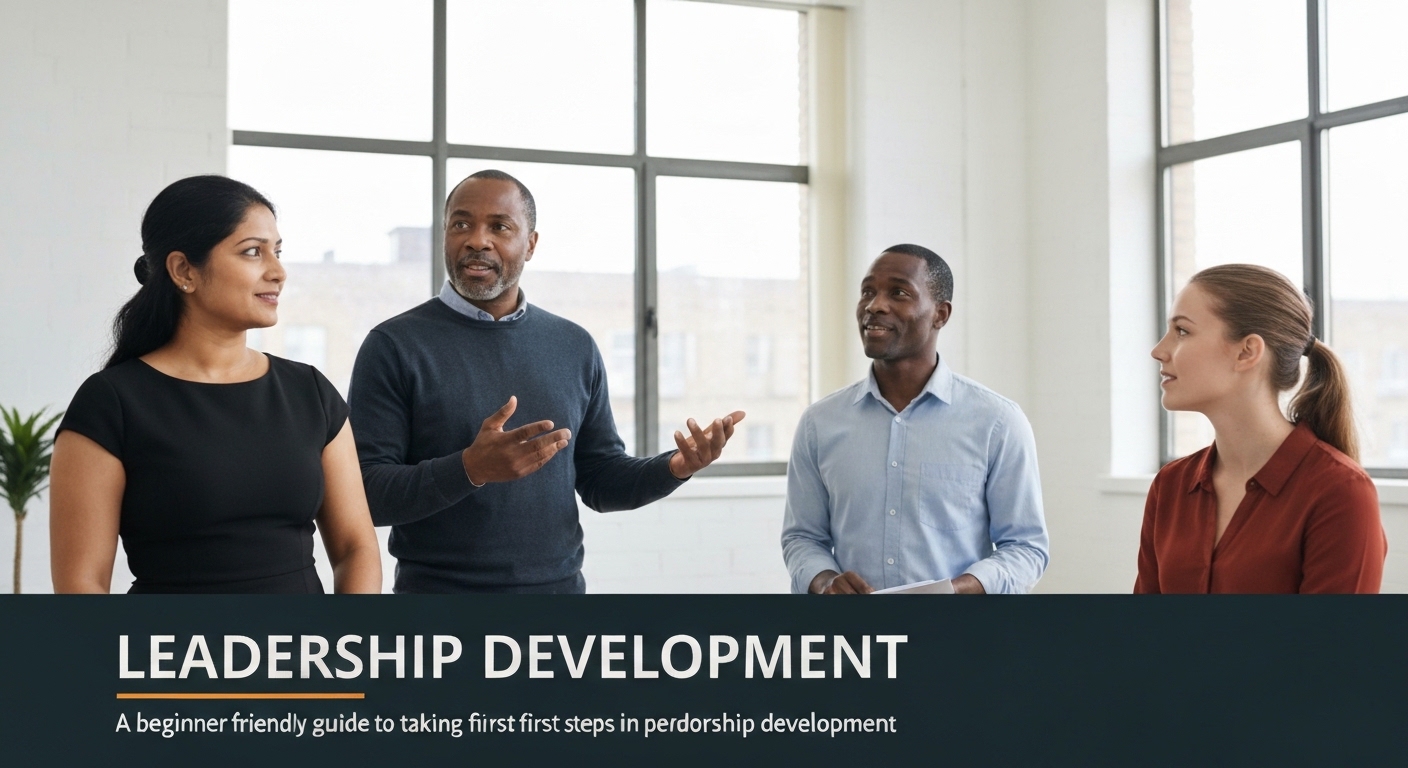
Leadership Development for Beginners: How to Get Started on Your Journey
Stepping into a leadership role — or simply recognising that you want to grow as a leader — can feel overwhelming. Where do you begin? What skills matter most? And how do you know which leadership approach suits you? The good news is that leadership is not a fixed trait you either possess or lack. It is a capability that can be cultivated deliberately over time, and starting the journey is simpler than most people think.
First, Understand What Leadership Actually Means
Before diving into frameworks and techniques, it helps to develop a clear mental picture of what leadership involves. At its core, leadership is the ability to guide, influence, and inspire others towards a shared purpose. Notice that this definition says nothing about job titles, seniority, or authority. You do not need to be a chief executive to lead; you simply need to care about outcomes and be willing to help others move towards them.
One useful starting point comes from the work of John Adair, who suggested that good leadership rests on three pillars:
- Qualities — who you are as a person, including your character and values.
- Situational awareness — what you know about the context you are operating in.
- Functional ability — what you actually do, the practical actions you take.
For beginners, this is a reassuring framework because it acknowledges that leadership is not purely about charisma or personality. Knowledge and action matter just as much, and both can be learned.
Leadership and Management: Two Sides of the Same Coin
A common stumbling block for newcomers is confusing leadership with management. They overlap, certainly, but they are not identical. Management tends to be analytical and process-driven — it is about planning, organising, and ensuring systems run smoothly. Leadership, by contrast, operates more in the realm of vision, motivation, and human connection.
"Leadership is of the spirit, compounded of personality and vision; its practice is an art. Management is of the mind, a matter of accurate calculation; its practice is a science."
— Field Marshal Lord Slim
In practice, the most effective professionals blend both skill sets. If you are just starting out, do not worry about choosing one over the other. Instead, focus on developing your ability to communicate a clear direction (leadership) whilst also learning how to organise resources and track progress (management). The two reinforce each other.
Build Your Emotional Intelligence Early
If there is one area that deserves your attention from day one, it is emotional intelligence (EI). Daniel Goleman's research demonstrated that high cognitive ability alone is insufficient for effective leadership. What truly distinguishes outstanding leaders is their capacity to understand and manage emotions — both their own and other people's.
Emotional intelligence comprises four interconnected domains:
- Self-awareness: Recognising your own emotional patterns and understanding how they influence your behaviour.
- Self-management: Regulating impulsive reactions and adapting calmly to changing circumstances.
- Social awareness: Practising empathy — genuinely sensing what others feel and seeing situations from their perspective.
- Relationship management: Building trust and guiding people constructively towards shared goals.
The encouraging aspect of EI is that, unlike IQ, it is not fixed. You can develop it through reflection, feedback, and deliberate practice. A simple starting exercise is to keep a brief journal after challenging interactions, noting what you felt, how you responded, and what you might do differently next time.
Experiment with Different Leadership Styles
There is no single "correct" way to lead. Goleman identified six distinct styles — ranging from visionary and coaching approaches to more directive, pace-setting methods — each suited to different situations. Similarly, Robert House's research emphasised that leaders become more effective when they adapt their style to the specific context rather than relying on one approach regardless of circumstances.
As a beginner, your goal should not be to master every style immediately. Instead, start by observing leaders around you. Which approaches seem to energise teams? Which create tension? Pay attention to the impact of different behaviours, and begin experimenting in low-stakes situations. For example, try asking more questions in your next team meeting (a democratic approach) rather than providing all the answers yourself. Notice what happens.
Practical Steps to Begin Your Leadership Development
- Seek feedback regularly. Ask trusted colleagues how your communication and decision-making land with others. Honest feedback accelerates growth faster than any textbook.
- Find a mentor. Identify someone whose leadership you admire and ask them to share their experiences. Learning from real-world stories is invaluable.
- Learn to delegate. Effective leaders distribute work thoughtfully, empowering others rather than hoarding responsibility. Start small — hand over a task you would normally do yourself and support the person through it.
- Invest in communication skills. Whether it is active listening, presenting ideas clearly, or giving constructive feedback, communication underpins every aspect of leadership.
- Read widely and reflect often. Leadership literature is vast, but even dedicating twenty minutes a week to reading and reflecting on what you have learned will compound over time.
The Journey Matters More Than the Destination
Leadership development is not a course you complete and tick off a list. It is an ongoing process of self-discovery, adaptation, and growth. The leaders who make the greatest impact are those who remain curious, stay open to feedback, and continually refine their approach. By starting with self-awareness, building emotional intelligence, and experimenting with different styles, you are already laying a strong foundation. The most important step is simply to begin.
Source: healthknowledge.org.uk