Leadership Development: Coaching vs Training — Which Delivers Better Results?
Organisations invest significant resources into developing their leaders, yet many struggle with a fundamental question: should they prioritise executive coaching, formal training programmes, or some combination of the two? The answer, as with most strategic decisions, depends on context — but understanding the distinct strengths and limitations of each approach is essential for making an informed choice.
Both coaching and training have earned their place in the leadership development toolkit. However, they operate on fundamentally different principles, target different outcomes, and suit different stages of a leader's growth. Let's examine each method in detail before exploring how they compare.
What Formal Leadership Training Offers
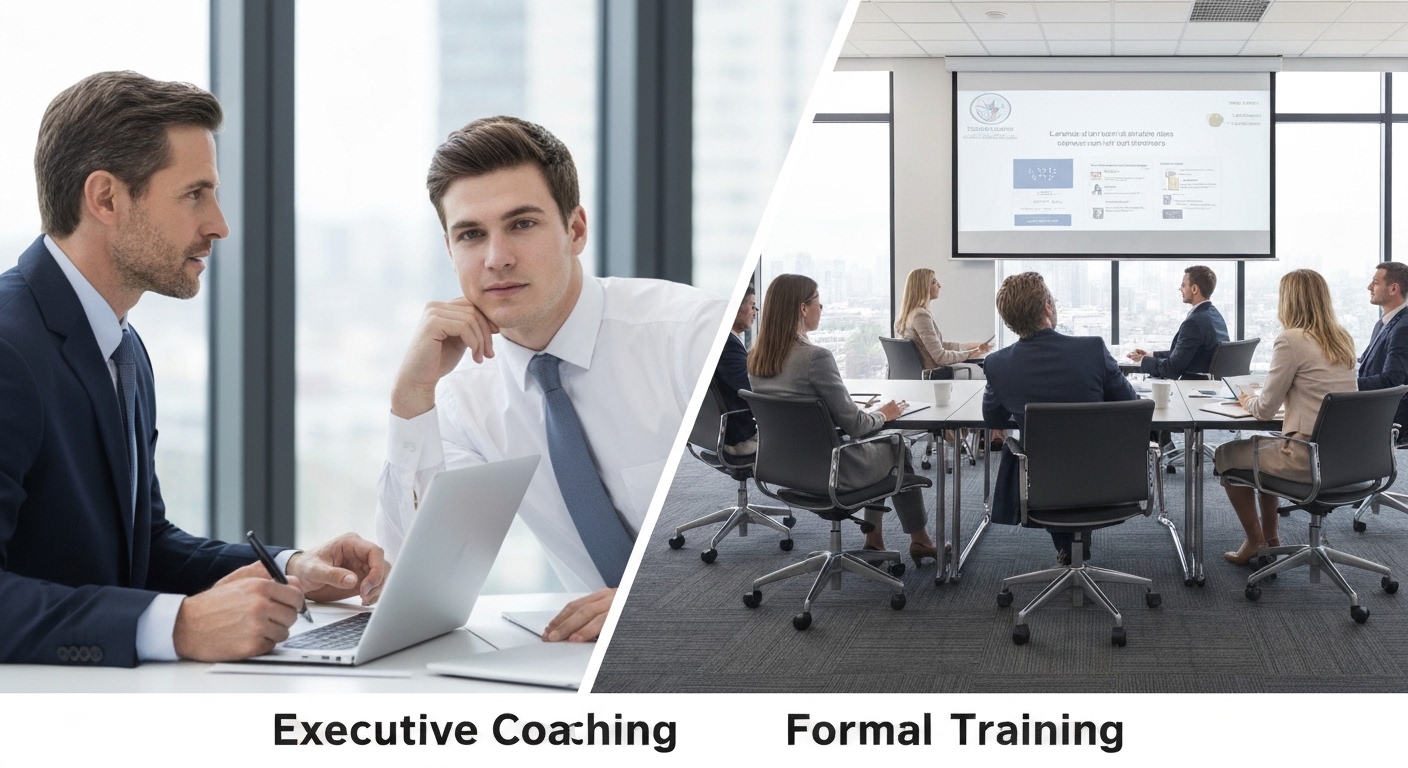
Formal training programmes — whether delivered as workshops, seminars, MBA modules, or structured online courses — provide leaders with frameworks, models, and knowledge they can apply in their roles. Training tends to be curriculum-driven, delivered to groups, and focused on transferring specific competencies within a defined timeframe.
The strengths of formal training include:
- Scalability: A single programme can develop dozens or even hundreds of leaders simultaneously, making it cost-effective for organisations needing to build capability across an entire tier of management.
- Consistency: Every participant receives the same core content, ensuring a shared language and common set of frameworks across the organisation.
- Structured knowledge transfer: Training excels at introducing new concepts — strategic thinking models, change management methodologies, financial literacy for non-finance leaders — in a logical, progressive sequence.
- Peer learning: Group settings create opportunities for participants to learn from one another's experiences, build networks, and develop a sense of shared purpose.
However, training has well-documented limitations. Knowledge acquisition does not automatically translate into behavioural change. A leader may leave a two-day workshop understanding the theory of emotional intelligence perfectly well, yet struggle to apply it when facing a difficult conversation with an underperforming team member the following Monday morning.
What Executive Coaching Offers
Executive coaching, by contrast, is a personalised, one-to-one developmental relationship in which a trained coach helps a leader identify goals, examine blind spots, and develop new behaviours through guided reflection and accountability. It is not about transferring knowledge but about facilitating insight and sustainable change.
The strengths of coaching include:
- Personalisation: Coaching addresses the specific challenges, strengths, and development areas of the individual leader, rather than following a generic curriculum.
- Behavioural change: Through ongoing conversations, feedback, and real-time application, coaching is particularly effective at shifting deeply ingrained habits and leadership patterns.
- Confidential space: Leaders can explore vulnerabilities, uncertainties, and strategic dilemmas they might never raise in a group training setting.
- Accountability: Regular sessions create a rhythm of commitment and reflection that sustains momentum over months rather than days.
Coaching is not without its drawbacks, however. It is resource-intensive, typically more expensive per individual than group training, and its effectiveness depends heavily on the quality of the coach-client relationship. It also assumes the leader already possesses a reasonable foundation of knowledge and self-awareness to build upon.
Comparing Results: Where Each Method Excels
When evaluating which approach delivers better results, it is important to define what "results" means in context. Consider the following comparison:
Training is most effective when leaders need to acquire new knowledge, frameworks, or technical competencies. Coaching is most effective when leaders need to change behaviours, navigate complex interpersonal dynamics, or accelerate their transition into a new role.
A newly promoted manager who has never managed a budget benefits enormously from a structured financial management course. That same manager, struggling to delegate effectively because of a deep-seated need for control, is far better served by coaching.
Organisations frequently make the mistake of using training to solve problems that require coaching, and vice versa. Sending a senior executive on yet another leadership programme when the real issue is a lack of self-awareness or an inability to build trust with their team is unlikely to yield meaningful change. Equally, investing in coaching for a leader who simply lacks foundational knowledge of strategy or governance is an inefficient use of resources.
The Case for an Integrated Approach
The most effective leadership development strategies rarely rely on one method alone. Instead, they combine training and coaching in a deliberate, sequenced manner. A well-designed programme might begin with a group training module to establish shared frameworks, followed by individual coaching engagements to help each leader apply those frameworks to their unique circumstances.
This integrated approach addresses both the knowledge gap and the behaviour gap — the two most significant barriers to leadership effectiveness.
When designing a blended strategy, consider the following principles:
- Use training to build a common foundation of knowledge and language across leadership cohorts.
- Use coaching to deepen individual application, address personal development areas, and support leaders through transitions.
- Align both methods to the organisation's strategic priorities and leadership competency framework.
- Measure outcomes at multiple levels — not just satisfaction and knowledge retention, but observable behavioural change and business impact.
Making the Right Investment
Neither coaching nor training is inherently superior. Each serves a distinct purpose, and the question is not which delivers better results in the abstract, but which delivers the right results for the specific development need at hand. Organisations that understand this distinction — and invest accordingly — are far more likely to build leadership capability that genuinely translates into improved performance, stronger teams, and lasting organisational impact.