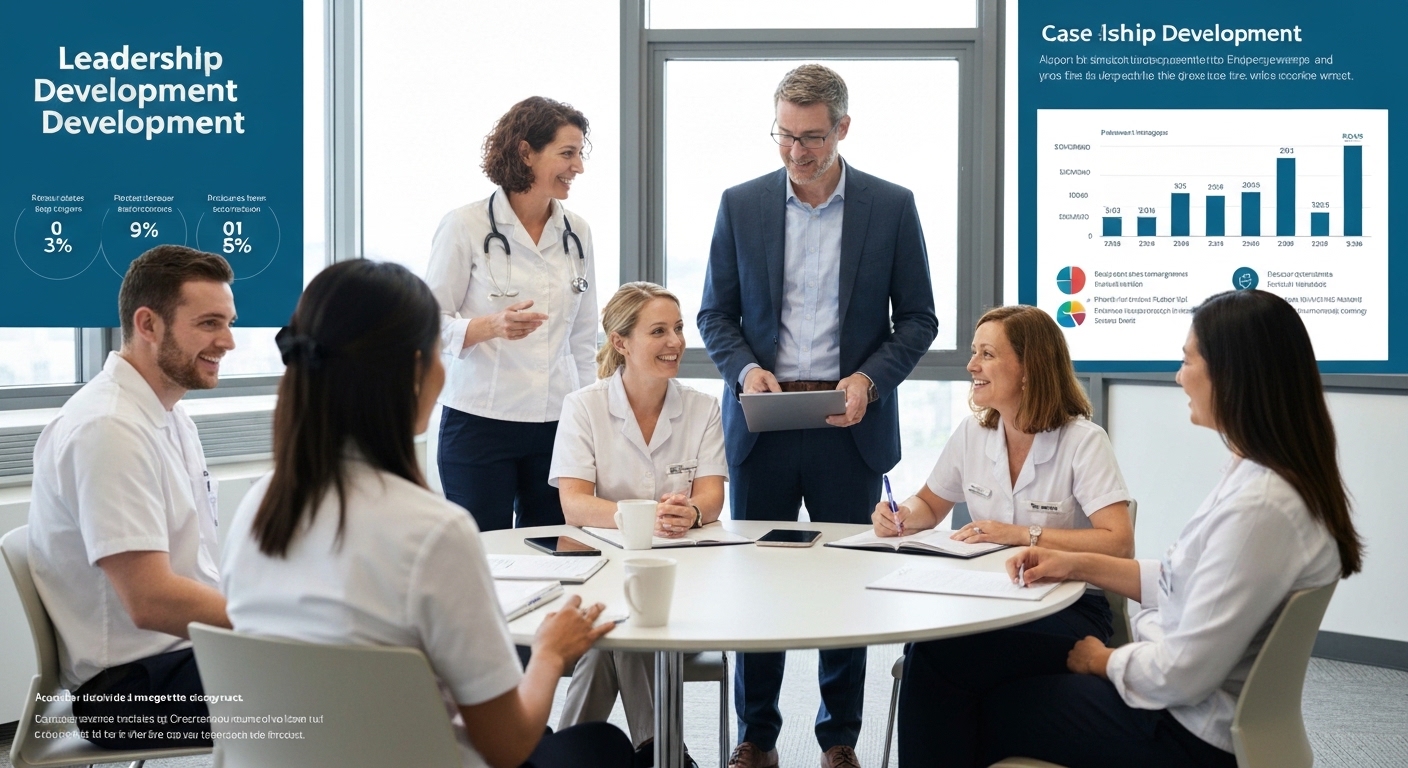
Case Study: How Leadership Development Transformed an NHS Trust
In the landscape of public healthcare, leadership quality can mean the difference between a struggling organisation and one that delivers outstanding patient outcomes. This case study explores how a mid-sized NHS Trust in the West Midlands undertook a comprehensive leadership development programme that reshaped its culture, improved staff retention, and ultimately enhanced the quality of care delivered to its community.
The Starting Point: A Trust Under Pressure
Like many NHS Trusts across the country, this organisation faced a familiar constellation of challenges. Staff turnover was running at 18% annually—well above the national average. Employee engagement scores had been declining for three consecutive years. Middle managers, many of whom had been promoted on the basis of clinical excellence rather than leadership capability, were struggling to navigate the complexities of managing diverse, overstretched teams.
Perhaps most tellingly, exit interviews revealed a recurring theme: departing staff cited poor leadership and a lack of developmental support as primary reasons for leaving. The Trust's executive board recognised that the problem was not one of individual incompetence but of systemic underinvestment in leadership capability at every level.
Designing the Programme: Beyond Tick-Box Training
The Trust partnered with an external leadership consultancy to design a programme that went far beyond conventional classroom-based training. The first step was a thorough skills audit, using 360-degree feedback, staff surveys, and structured interviews with stakeholders across the organisation. This diagnostic phase revealed several critical gaps:
- Emotional intelligence: Many leaders lacked the ability to recognise and respond to the emotional needs of their teams, leading to a culture where staff felt undervalued and unheard.
- Strategic thinking: Operational firefighting had become the default mode, with little capacity for long-term planning or innovation.
- Communication: Information flowed downwards but rarely upwards. Frontline staff reported feeling disconnected from organisational decision-making.
- Change management: With constant restructuring and policy shifts, leaders were expected to guide their teams through transition—yet few had any formal preparation for doing so.
Armed with these insights, the programme was structured around four interconnected pillars: self-awareness, strategic capability, communication mastery, and resilience in the face of change. Crucially, it was not a one-off event but a sustained, 18-month journey incorporating coaching, action learning sets, mentoring relationships, and real-world project work.
Implementation: Learning by Doing
One of the programme's most distinctive features was its emphasis on applied learning. Participants were not simply taught theoretical frameworks; they were required to lead live improvement projects within the Trust. One cohort, for example, redesigned the patient discharge process for a busy acute ward, applying strategic thinking and stakeholder engagement skills in a high-pressure, real-world context.
"The moment it clicked for me was when I realised that leadership isn't about having all the answers—it's about creating the conditions for your team to find them together." — Programme participant, Band 7 Ward Manager
Mentoring proved to be another powerful element. Senior leaders were paired with emerging managers, creating cross-hierarchical relationships that broke down silos and fostered a culture of mutual learning. For the senior leaders, mentoring became a developmental experience in its own right, sharpening their coaching skills and reconnecting them with the realities of frontline practice.
The Results: Measurable and Cultural
After 18 months, the outcomes were striking. Staff turnover dropped from 18% to 12%. Employee engagement scores rose by 15 percentage points, with the most significant improvements recorded in the categories of "confidence in leadership" and "feeling valued at work." Sickness absence rates fell, and the Trust's annual staff survey showed a marked increase in the number of employees who would recommend the organisation as a place to work.
Beyond the quantifiable metrics, the cultural shift was palpable. Leaders at all levels reported greater confidence in handling difficult conversations, navigating ambiguity, and supporting their teams through periods of uncertainty. The executive board noted that strategic discussions became richer and more collaborative, with a wider range of voices contributing to organisational direction.
Lessons for Other Organisations
This case study illustrates several principles that are transferable well beyond the NHS:
- Diagnosis before prescription: Effective leadership development begins with an honest assessment of where gaps exist, not assumptions about what leaders need.
- Sustained investment over quick fixes: A single workshop rarely changes behaviour. Lasting transformation requires ongoing support, reflection, and accountability.
- Integration with real work: The most powerful learning happens when leaders apply new skills to genuine organisational challenges, not hypothetical case studies.
- Leadership at every level: Restricting development to the executive suite misses the point. Organisations thrive when leadership capability is cultivated throughout the hierarchy.
The experience of this NHS Trust demonstrates that leadership development, when approached with rigour and commitment, is not a luxury—it is a strategic imperative. In an era of relentless change, the organisations that invest in growing their leaders are the ones best equipped to attract talent, retain expertise, and deliver exceptional results.
Source: skillsoft.com